
The Uninvited
Are Probiotics Making You Fat?

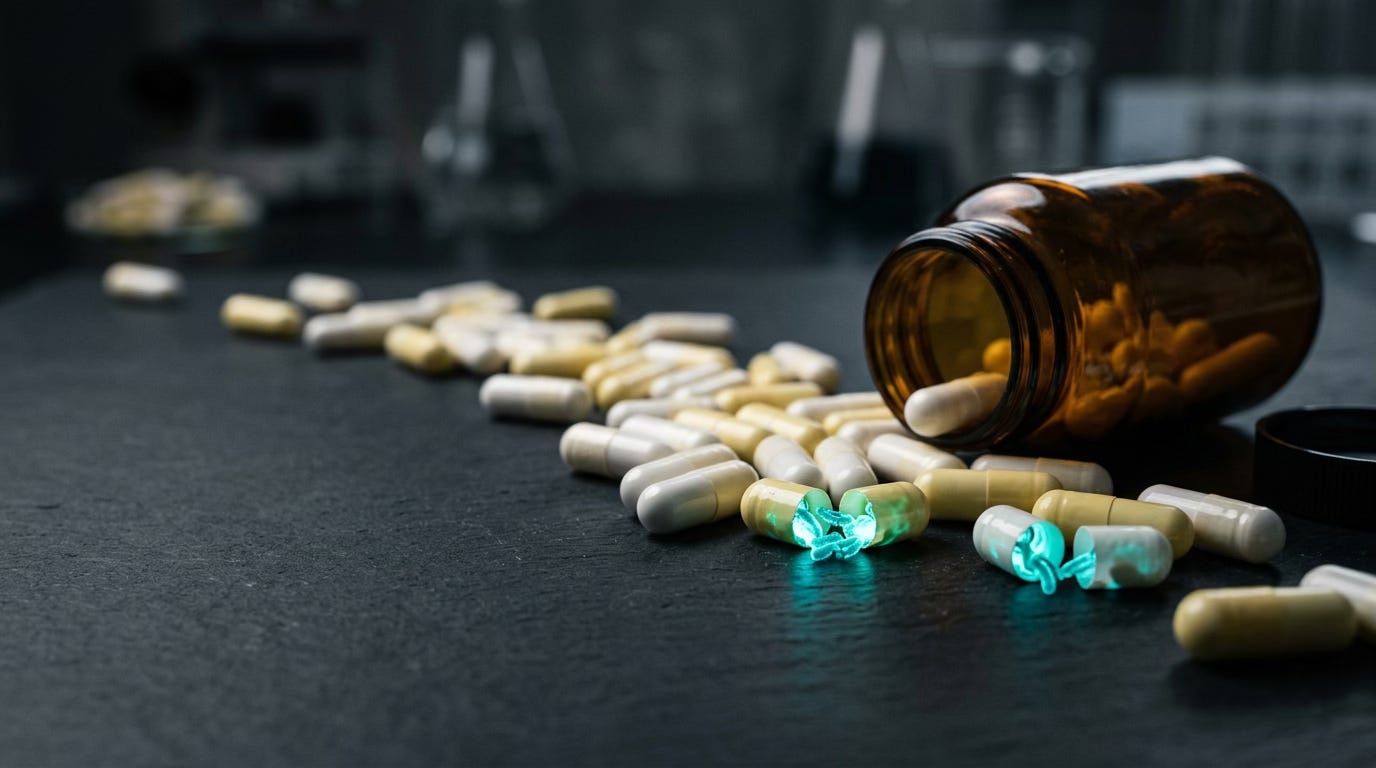
TL;DR: Probiotics are not the universally benign supplements the wellness industry has made them out to be. Certain Lactobacillus strains, some closely related to those used in agriculture to promote weight gain in livestock, have been associated with weight gain in humans. A 2025 pharmacovigilance study of the FDA Adverse Event Reporting System identified gastrointestinal reactions, immune disorders, and previously unrecognized neuropsychiatric signals among reported adverse events. Probiotic supplements are poorly regulated, frequently mislabeled, and deliver bacterial doses that likely far exceed those found in traditional diets. Meanwhile, postbiotics (preparations of dead microbial cells and their metabolites) may offer overlapping benefits with fewer risks in certain populations. The evidence supports obtaining most of your probiotics from naturally fermented foods and reserving supplements for specific, clinician-guided indications. More is not always better, especially when you are manipulating an ecosystem you do not fully understand.
Walk into any health food store, or frankly, any big-box retailer, and you will be greeted by a glowing aisle of promises. Bottles labeled with scientific-sounding strains. Claims of immune boosts, digestive harmony, and even mental clarity. Probiotics have become the Swiss army knife of the supplement world, promoted for a dizzying variety of health benefits. But what if these well-meaning bugs are not always working in your favor?
A major Wall Street Journal article, “Those Probiotics May Actually Be Hurting Your ‘Gut Health,’” echoed a caution I have been sharing with patients and readers for years: more is not always better, especially when it comes to your microbiome.1 The evidence on probiotics is genuinely mixed. Some strains, in some populations, offer clear benefit. But indiscriminate use is rarely optimal, and the emerging fields of prebiotics and postbiotics further complicate the picture.
The Confusion Starts With the Name
Before going further, a distinction that matters. Probiotics are defined as live microorganisms that, when administered in adequate amounts, confer a health effect on the host.2 These are commonly bacteria or yeasts. Probiotic foods like yogurt, kefir, kimchi, and sauerkraut naturally contain a wide range of microorganisms, though the specific species and quantities vary enormously between products and preparations.3
Prebiotics are something else entirely. They are indigestible fibers, such as inulin and selected other fermentable fibers, that serve as food for the bacteria already living in your gut, helping nurture beneficial species you already carry.4Prebiotics are not living organisms. They are found in foods like onions, garlic, and whole grains, and their role is to feed the tenants rather than import new ones.
This distinction matters because the supplement aisle treats them as interchangeable. They are not. Although specific probiotic strains have shown benefit in some cases of pediatric infectious diarrhea, antibiotic-associated diarrhea, irritable bowel syndrome, and atopic dermatitis, effectiveness depends on strain, dose, and the individual’s underlying gut ecosystem. Expert groups do endorse certain probiotic uses in these specific contexts, but a one-size-fits-all approach does not apply. 2,5
The Numbers Game
A serving of unpasteurized, live-culture yogurt might contain on the order of hundreds of millions to a few billion live bacteria, yet only a fraction of those survive digestion and colonize the gut.2,6 A single enteric-coated probiotic capsule, by contrast, may contain from 1 billion up to tens of billions of organisms, designed to help many more survive stomach acid so that substantially greater numbers reach your intestine alive.2 That is a microbial dose that likely far exceeds what humans have consumed through traditional diets.
This disparity matters. Bigger doses are not necessarily better. Most clinical studies showing benefit from probiotic use carefully select strains, define doses, and specify durations. The bottle on the shelf at your pharmacy rarely reflects that level of specificity.
When “Healthy Bacteria” Are Not Healthy for Everyone
Three issues deserve attention.
The first is regulation, or rather the lack of it. Probiotics are classified as dietary supplements in the United States, meaning neither their composition nor their claims are subject to rigorous FDA oversight. Multiple studies have demonstrated that the actual strains, quantities, viability, and purity of commercial probiotics often do not match what is on the label. Misidentification, contamination, and dosage discrepancies are common.7,8,9 The FDA has issued draft guidance on quantitative labeling of live microbials, acknowledging that the labeled weight of a microbial ingredient may not accurately reflect the number of live organisms throughout a product’s shelf life.10 But this guidance remains nonbinding.
The second is the knowledge gap. The human microbiome influences everything from immunity to neurotransmitter production, yet we are far from understanding which bacterial strains are helpful, harmful, or harmless, aside from a few specific clinical scenarios.5 Benefits shown in one study population, with one strain, at one dose, may not generalize.2,11
The third is unintended consequences, and this is where the story gets personal.
The Weight I Could Not Explain
Several years ago, I began taking a high-dose, enteric-coated probiotic. Over several months, my weight increased despite no changes in diet or exercise. As a physician, this piqued more than casual curiosity. This is an N=1 observation, but it prompted me to review the broader literature.
What I found was sobering. Large-scale meta-analyses and mechanistic studies reveal that certain probiotic strains, particularly some Lactobacillus species, have been associated with weight gain rather than loss in both humans and animals. Some of these strains, or closely related ones, are used in the agricultural industry to promote weight gain in livestock.2,12,13 It is worth emphasizing that the picture is not uniformly one-sided: several trials also demonstrate modest weight loss with particular formulations, and a 2026 Frontiers meta-analysis of randomized controlled trials, predominantly from East Asian populations, found small but positive weight reductions with certain products.15 But probiotic dosing, duration, and strain specificity strongly influence metabolic outcomes. A 2025 Scientific Reports meta-analysis confirmed this variability, finding that probiotics exhibit strain-dependent, dose-dependent, and population-dependent effects on body weight.14
After discontinuing the probiotic, my weight gradually returned to its prior baseline, suggesting a possible connection. The key lesson: the gut ecosystem is a finely tuned, complex network, and manipulating it with broad, non-targeted interventions can have unexpected effects. Delivering massive doses of bacteria may overwhelm or crowd out essential native species, disrupt the balance of the gut ecosystem, or alter immune and metabolic signaling in unpredictable ways. For immunocompromised patients, and in rare cases even otherwise healthy individuals, serious adverse events have been reported.2,16
A 2025 pharmacovigilance study analyzing the FDA Adverse Event Reporting System from 2005 to 2023 identified 74 adverse event reports related to oral probiotic products over nearly two decades, despite widespread use. Gastrointestinal reactions and immune system disorders were the most commonly reported. Notably, the study flagged psychoneurological disorders, including agitation and anxiety, as potential new signals of probiotic adverse reactions.17 A separate 2025 review cataloged the mechanisms by which probiotics can become opportunistic pathogens: translocation from the gut into the bloodstream, biofilm formation, antibiotic resistance gene transfer, and toxin production, particularly in immunocompromised individuals.18
The numbers are small relative to the billions of doses consumed annually. But the point is not that probiotics are dangerous for most people. The point is that they are not the universally benign intervention that marketing suggests.
Dead Bugs, Big Impact
Not all the benefits attributed to probiotics come from live bacteria. Postbiotics are preparations of inanimate (dead or inactivated) microbial cells, cell constituents, and metabolites. When bacteria die, whether in your stomach or during food processing, they leave behind a suite of molecules: short-chain fatty acids, cell wall fragments, and extracellular DNA that can directly modulate immune function, reduce inflammation, and support gut barrier integrity.19,20,21 These fragments are also likely involved with rest and rejuvenation (as I wrote about in The Two Gates of Sleep).
This field has accelerated rapidly. A 2025 comprehensive review in the journal Food Frontiers cataloged postbiotic applications across immunity, metabolic health, mental health, and skin inflammation, noting that in small clinical trials, heat-inactivated Lactobacillus strains improved mood states and sleep quality.22 A 2025 review in Frontiers in Microbiomes documented early evidence of postbiotic efficacy in diarrhea, allergic disorders, metabolic syndrome, and cardiovascular risk.23 Postbiotic interventions may offer overlapping benefits to some live probiotics, with theoretical and early clinical support for fewer risks in certain high-risk groups, and without the challenge of maintaining viable cultures in foods and pills.24
Research on postbiotics is still maturing, and variability in preparation methods and compositions remains a significant limitation. But the trajectory suggests that some of what we have been trying to accomplish with live bacteria may be achievable, perhaps more safely, with what those bacteria leave behind.
What This Means
Probiotics are not inherently harmful. They are not the villain of this story. In the right clinical scenario, with the right strain, dose, and duration, they can offer real, targeted benefits. But the popular approach of randomly supplementing with a high-potency, multi-strain pill is not a precision tool. It is more akin to scattering untested seeds into your garden and hoping for a harvest. If you would not plant an unidentified seed mix in your vegetable bed, it is worth asking why you would do the equivalent in your gut.
Current evidence and the uncertainty that still surrounds long-term high-dose supplementation make it reasonable to obtain most of your probiotics from naturally fermented foods, which provide a diversity of strains and doses in a context that traditional diets have long included. If you are considering supplements, ask your physician or dietitian first, especially if you are immunocompromised, pregnant, or have complex medical conditions. Prefer products with transparent labeling, researched strains, and evidence backing for your particular condition. The NIH Office of Dietary Supplements maintains a detailed fact sheet on probiotics that is worth reading.2
Prebiotics and postbiotics each deserve their own dedicated discussion, and they will get one.
References
Reddy S. Those probiotics may actually be hurting your “gut health.” Wall Street Journal. October 10, 2019. https://www.wsj.com/articles/those-probiotics-may-actually-be-hurting-your-gut-health-11570721466
National Institutes of Health, Office of Dietary Supplements. Probiotics: fact sheet for health professionals. Updated March 27, 2025. https://ods.od.nih.gov/factsheets/Probiotics-HealthProfessional/
Marco ML, Heeney D, Binda S, et al. Health benefits of fermented foods: microbiota and beyond. Curr Opin Biotechnol. 2017;44:94-102. doi:10.1016/j.copbio.2016.11.010
Gibson GR, Hutkins R, Sanders ME, et al. The International Scientific Association for Probiotics and Prebiotics (ISAPP) consensus statement on the definition and scope of prebiotics. Nat Rev Gastroenterol Hepatol. 2017;14(8):491-502. doi:10.1038/nrgastro.2017.75
Suez J, Zmora N, Segal E, Elinav E. The pros, cons, and many unknowns of probiotics. Nat Med. 2019;25(5):716-729. doi:10.1038/s41591-019-0439-x
Lin YP, Thibodeaux CH, Pena JA, Ferry GD, Versalovic J. Probiotic Lactobacillus reuteri suppresses proinflammatory gene expression in the intestine. Infect Immun. 2008;76(4):1776-1782. doi:10.1128/IAI.01047-07
Fredua-Agyeman M, Larbi EA. Inaccurate labelling practices in probiotic products: a regulatory shortfall in Accra, Ghana. PLoS One. 2025;20(5):e0322194. doi:10.1371/journal.pone.0322194
Mazzantini D, Calvigioni M, Celandroni F, et al. Spotlight on the compositional quality of probiotic formulations marketed worldwide. Front Microbiol. 2021;12:693973. doi:10.3389/fmicb.2021.693973
Council for Responsible Nutrition and International Probiotics Association. Best practices guidelines for probiotics. 2017.
US Food and Drug Administration. Draft guidance for industry: policy regarding quantitative labeling of dietary supplements containing live microbials. 2018. https://www.fda.gov/files/food/published/Draft-Guidance-for-Industry--Policy-Regarding-Quantitative-Labeling-of-Dietary-Supplements-Containing-Live-Microbials-PDF.pdf
Wilkins T, Sequoia J. Probiotics for gastrointestinal conditions: a summary of the evidence. Am Fam Physician. 2017;96(3):170-178.
Raoult D. Probiotics and obesity: a link? Nat Rev Microbiol. 2009;7:616. doi:10.1038/nrmicro2209
Million M, Angelakis E, Paul M, Armougom F, Leibovici L, Raoult D. Comparative meta-analysis of the effect of Lactobacillus species on weight gain in humans and animals. Microb Pathog. 2012;53(2):100-108. doi:10.1016/j.micpath.2012.05.007
Wang S, Zhu H, Lu C, Kang Z, Luo Y, Feng L. Effects of oral supplementation of probiotics on body weight, body mass index, and waist circumference: a systematic review and meta-analysis of randomized controlled trials. Sci Rep. 2025;15:90820. doi:10.1038/s41598-025-90820-8
Chen Y, Li X, Zhang W, et al. Efficacy of probiotic supplementation for body weight management in overweight and obese adults: a meta-analysis of randomized controlled trials predominantly from East Asia. Front Public Health. 2026;14:1767108. doi:10.3389/fpubh.2026.1767108
Doron S, Snydman DR. Risk and safety of probiotics. Clin Infect Dis. 2015;60(suppl 2):S129-S134. doi:10.1093/cid/civ085
Liu Y, Zhang X, Wang J, et al. A pharmacovigilance study on probiotic preparations based on the FDA Adverse Event Reporting System from 2005 to 2023. Front Cell Infect Microbiol. 2025;15:1455735. doi:10.3389/fcimb.2025.1455735
Xu H, Chen L, Zhao M, et al. Exploring the dark side of probiotics to pursue light: intrinsic and extrinsic risks to be opportunistic pathogens. Biosaf Health. 2025;7(3):169-179. doi:10.1016/j.bsheal.2025.03.002
Ma L, Tu H, Chen T. Postbiotics in human health: a narrative review. Nutrients. 2023;15(2):291. doi:10.3390/nu15020291
Salminen S, Collado MC, Endo A, et al. The International Scientific Association of Probiotics and Prebiotics (ISAPP) consensus statement on the definition and scope of postbiotics. Nat Rev Gastroenterol Hepatol. 2021;18(9):649-667. doi:10.1038/s41575-021-00440-6
Aguilar-Toala JE, Garcia-Varela R, Garcia HS, et al. Postbiotics: an evolving term within the functional foods field. Trends Food Sci Technol. 2018;75:105-114. doi:10.1016/j.tifs.2018.03.009
Mafe AN, Edo GI, Mafe O, et al. Postbiotics in functional foods: microbial derivatives shaping health, immunity and next-generation nutrition. Food Front. 2026;7:e70205. doi:10.1002/fft2.70205
Ogunleye OO, Adetunji AI, Olaniran AO. Postbiotics and their biotherapeutic potential for chronic disease and their feature perspective: a review. Front Microbiomes. 2025;4:1489339. doi:10.3389/frmbi.2025.1489339
Pique N, Berlanga M, Minana-Galbis D. Health benefits of heat-killed (inactivated) probiotics: an overview. Int J Mol Sci. 2019;20(10):2534. doi:10.3390/ijms20102534
Please comment, like, and/or share if you enjoyed this essay. A recommendation or restack helps new readers find HealthHippieMD.
Wellness. Rewired. © 2026 HealthHippieMD | Knowvigate, LLC